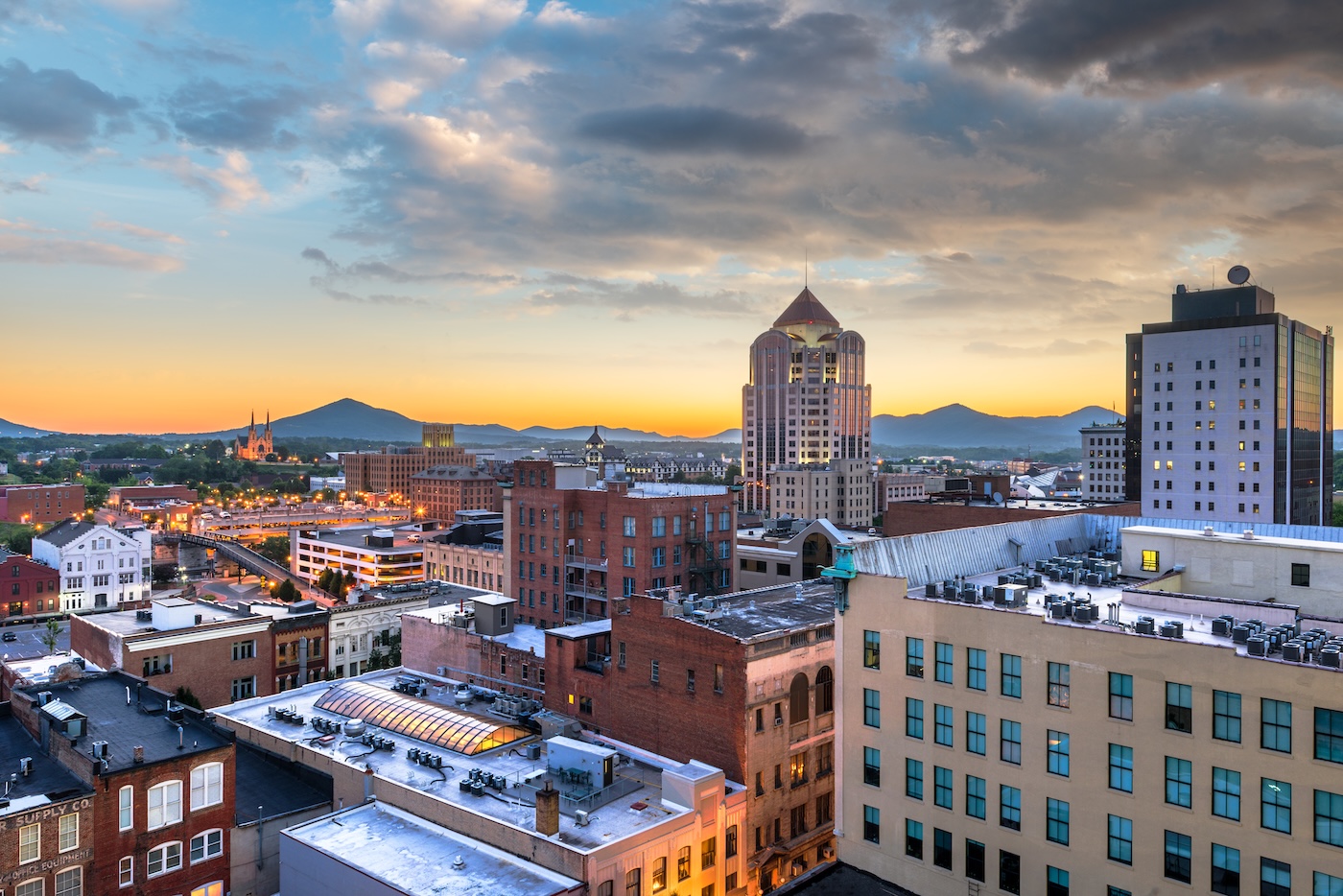
Roanoke is your city. The river that runs through downtown, the Star that lights the south ridge, the Williamson Road corridor and the porches of Old Southwest, these are the streets where recovery has to actually work.
Roanoke Refuge is an outpatient addiction treatment center located in Roanoke, Virginia, licensed by the Virginia Department of Behavioral Health and Developmental Services. We provide Partial Hospitalization (PHP) and Intensive Outpatient (IOP) programs for adults with substance use disorders throughout Roanoke City and the greater Roanoke Valley, including the Northwest, Southwest, Northeast, Southeast, Downtown, and South Roanoke neighborhoods that make up the city.
Whether you are calling from the historic row homes of Old Southwest or from a quiet street off Williamson Road, the program is built for the specific clinical reality of recovery in this city.
Our treatment approach grounds the clinical framework, and the level-of-care recommendation is made during the admissions assessment using an ASAM level-of-care assessment.
Substance Use in the City of Roanoke
Most families who call us already know the recent history of this city the hard way. They have lost a friend, a coworker, a cousin. The numbers below confirm what the neighborhood already felt.
The Virginia Department of Health has documented that the overdose death rate in Roanoke City and Salem more than doubled between 2019 and 2022, with fentanyl driving the majority of fatal overdoses (VDH, 2024). Methamphetamine-related deaths in the Roanoke region increased substantially during the same window, and Blue Ridge Behavioral Healthcare, the community services board serving Roanoke City, Salem, Botetourt, Craig, and Roanoke County, has documented significant unmet need for accessible outpatient behavioral health services across the Valley.
The 2023 numbers were the first sign of meaningful relief:
- Overdose deaths in the Roanoke region dropped 20 to 35 percent in a single year.
- Nonfatal overdose ED visits dropped 10 percent the same year.
- Statewide overdose deaths fell 33.5 percent in 2024 compared to 2023.
- Fentanyl-involved deaths down 43.6 percent statewide (VDH, 2024).
Roanoke City is moving in the right direction. The work is far from finished. Roanoke Refuge exists to help close the remaining gap.
Why Local Outpatient Treatment Matters
For many Roanoke residents, leaving town for residential treatment is not an option. Jobs do not pause for thirty days. Children still need to be picked up at three. Rent is still due. For people in that math, and for many others for whom outpatient care is the clinically right choice, a high-quality local outpatient option is the solution. Local outpatient treatment means practicing recovery skills in the same community, relationships, and environment where those skills will need to sustain a lifetime of recovery. The coping software of recovery gets written and tested against the actual triggers of life in Roanoke City rather than inside a bubble removed from the conditions you will return to.
Local Recovery Resources in Roanoke
You are not building a recovery from scratch in this city. There is already a network of people and places quietly doing this work. Here is where some of them are:
Blue Ridge Behavioral Healthcare is the community services board for Roanoke City, Salem, and Roanoke County. They provide outpatient psychiatric, crisis stabilization, and case-management services, and they are the first call for clients who need a sliding-fee option or who fall outside our private-insurance contract list.
Carilion Roanoke Memorial Hospital Behavioral Health runs the inpatient psychiatric unit and emergency psychiatric assessments for the region. We coordinate clinical handoffs in both directions — clients stabilized at Carilion who step into outpatient with us, and clients in our programs who need a brief inpatient stay for acute psychiatric symptoms.
The Vet Center Roanoke at 350 Albemarle Avenue SW provides confidential readjustment counseling for combat veterans, their families, and survivors of military sexual trauma. Their work is complementary to outpatient SUD treatment; we refer to them frequently for the trauma piece of the clinical picture.
AA, NA, and SMART Recovery meetings run throughout the city most days of the week. The aa.org, na.org, and smartrecovery.org meeting finders show in-person and online options. Many of our clients build their long-term recovery community from the meetings they find while still in PHP or IOP.
Two crisis lines are always available regardless of where a client is in treatment: the 988 Suicide and Crisis Lifeline (call or text 988) and the SAMHSA National Helpline (1-800-662-4357) for free, confidential substance use referrals 24 hours a day.
))}
Local Geography and Access
Roanoke City sits at the convergence of I-581 and US-460, with I-81 along the western edge of the Valley and US-220 running south. The Mill Mountain Star above downtown is the regional landmark visible from most of the city, and the Roanoke River runs through the heart of the urban core.
The city is geographically compact, which means most people reach our facility within a short drive from anywhere inside the city limits. Roanoke Regional Airport on the city’s northern edge serves both regional and connecting flights, which matters for clients traveling in from outside the Valley for specific clinical reasons.
Commute time from anywhere inside Roanoke City — Cave Spring, Hollins, Old Southwest, downtown — runs about fifteen to twenty minutes. The same window covers most of Roanoke County and the closer parts of Botetourt and Bedford counties. Clients farther out from Vinton, Smith Mountain Lake, or the rural edges of Bedford County typically drive thirty to forty minutes each way, which is workable for PHP and IOP and is the population that most often shifts to Telehealth IOP for the working-and-recovery phase.
Getting to Roanoke Refuge
Roanoke Refuge sits at 1630 Braeburn Drive in Salem, immediately west of Roanoke City off Route 419 and a few minutes from Interstate 81. From downtown Roanoke, take I-581 south to I-81 north for one exit, then exit at Route 419 toward Salem; the facility is on the right within a mile. From the Cave Spring and South Roanoke neighborhoods, Route 419 runs north directly to the facility. From Hollins and the north Roanoke neighborhoods, I-81 south to Route 419 is the most reliable route. Parking is free on site and the entrance is wheelchair-accessible.
Ready when you are.
From Roanoke, the drive to our Salem facility is short. The admissions team is the first call — free, confidential, no clinical commitment. Bring whatever questions you have about insurance, level of care, or what the first week actually looks like. Call (540) 900-0353 when you are ready.